
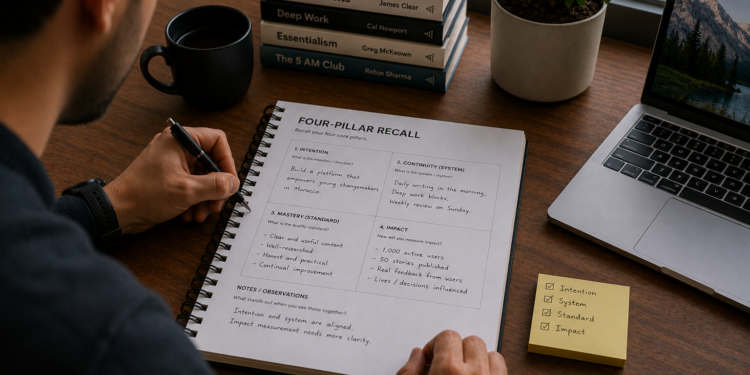
بحلول الوقت الذي تمتلك فيه نية واضحة، وإيقاعا يعمل، ومعيار جودة حقيقيا، وطريقة لقياس الأثر، تكون قد بنيت أربع قطع منفصلة، لا منظومة بعد. استرجاع الركائز الأربع يضعها جنبا إلى جنب، الخطوة الأولى قبل ربطها.
أربع قطع لا تصنع منظومة بذاتها
رأيت أصحاب مشاريع بنية واضحة فعلا، وروتين لا بأس به، ومعايير حقيقية ينهارون تحت الضغط، لأن لا شيء كان يربط القطع ببعضها. أسبوع سيء واحد كان يصيب الأربعة معا، ولم تكن هناك بنية تحتها تُمسكها معا.
الاسترجاع هو الخطوة الأولى نحو تلك البنية، لا البنية نفسها.
لمن هذا، وكم يستغرق
نحو 7 دقائق. يحتاج إلى نية، ومنظومة، ومعيار، ومقياس أثر بشكل ما، من أي تمارين أنجزتها.
ماذا يتضمن هذا التمرين
- أربعة حقول استرجاع، واحد لكل ركيزة.
كيف تستفيد منه أكثر
انسخ ما كتبته بالفعل بدل تعديله الآن. التعديل يأتي لاحقا، بعد أن تستطيع رؤية الصورة كاملة.
ما الذي يتغيّر إن فعلت هذا فعلا
النتيجة المباشرة هي وثيقة تجمع الركائز الأربع في مكان واحد. الفائدة هي أنك تستطيع أخيرا مقارنتها جنبا إلى جنب. الأثر هو أن الاختلال يصبح مرئيا بدل أن يبقى شعورا غامضا.
تحميل استرجاع الركائز الأربع
الخطوة التالية: ورقة عمل طبقة المنظومة، التي تربط هذه القطع الأربع بما يُمسكها معا فعلا.
الأسئلة الشائعة
ما الفرق بين هذا ومخطط نظامك الشخصي الكامل؟
المخطط الكامل يشمل خطوة الاسترجاع هذه، بالإضافة إلى طبقة المنظومة وقراءة ختامية، في جلسة واحدة تستغرق نحو 30 دقيقة. هذا هو الاسترجاع فقط، الثلث الأول.
هل يجب أن أُنهي تمارين الركائز الأربعة أولا؟
تحتاج إلى شيء مكتوب لكل ركيزة، ولو مسودة تقريبية. الاسترجاع لا يملك ما يبني عليه دون ذلك.
ماذا لو كانت إحدى الركائز أضعف بوضوح من الأخريات؟
اكتبها بصدق رغم ذلك. هذا بالضبط ما صُمّمت الورقة التالية لرصده.


![Why Does Your System Only Work When You Feel Like It? (The Two Parts Every System Actually Needs) Every system that holds has the same starting point: a fixed trigger and one small, defined action. The Trigger-Action Designer builds both in about 7 minutes, the two parts most plans skip in favor of just deciding to try harder. A system is a structure, not a feeling At IBM, we didn’t manage large accounts by hoping the team felt inspired on a given Tuesday. We built fixed checkpoints, specific and repeatable. I didn’t think of that as a life skill at the time. It is one. A trigger has to be fixed, never “whenever I feel like it,” and an action has to be small enough to do without deciding. Who this is for, and how long it takes About 7 minutes. For anyone who has an intention but no system carrying it yet. What’s inside A trigger field. An action field. A worked example. How to get the most out of it Resist making the action bigger than it needs to be. Small enough to do without deciding is the whole point. What changes if you actually do this The output is one designed system start. The outcome is that the action becomes something you don’t have to decide on. The impact is that your intention gets a structure to run on. Download The Trigger-Action Designer [Download button placeholder, to be added.] Next step: The Follow-Through Tracker, which adds the part most systems skip and runs the whole thing for the first time. FAQ How is this different from the full Continuity Design Template? The full template includes the follow-through step too, in one sitting. This is the first half, for a quick start. What if I can’t think of a good trigger? Anchor it to something that already happens every day, closing your laptop, making coffee, a specific time. Consistency matters more than cleverness. Does this work for team systems, not just personal ones? Yes. The same trigger-and-action logic applies to a team habit as much as a personal one.](https://yassinebentaleb.com/wp-content/uploads/2026/07/Why-Does-Your-System-Only-Work-When-You-Feel-Like-It-The-Two-Parts-Every-System-Actually-Needs-350x250.png)