
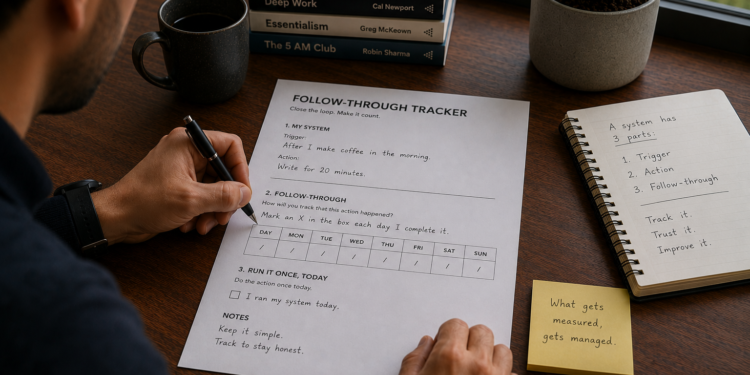
المحفّز والإجراء لا يشكلان منظومة كاملة دون طريقة للتحقق من حدوثهما. متابعة الالتزام تضيف هذا الجزء الثالث، ثم تجعلك تُشغّل المجموعة كاملة مرة واحدة، اليوم.
الجزء الذي يقول لك الحقيقة
المتابعة تبدو كأعمال ورقية، وهذا بالضبط سبب تجاوزها. لكنها ليست كذلك. دونها، يستحيل التمييز بين منظومة تعمل وأخرى تفشل بصمت، حتى تتسع الفجوة أكثر من أن تُغلق في يوم واحد.
هذا هو نفس الانضباط الذي كان وراء لوحات المتابعة التي بنيتها في إدارة المشاريع في IBM، ليس لأن المتابعة مُرضية بذاتها، بل لأنها الطريقة الوحيدة الصادقة لرصد الانزلاق مبكرا.
لمن هذا، وكم يستغرق
نحو 7 دقائق. لكل من حدد بالفعل محفّزا وإجراء ويحتاج إلى الجزء الأخير.
ماذا يتضمن هذا التمرين
- حقل لمتابعة الالتزام.
- مربّع اختيار لتشغيل المنظومة مرة واحدة، اليوم.
كيف تستفيد منه أكثر
اختر شيئا بسيطا بما يكفي لتستمر في استخدامه. عدّاد بسيط أفضل من نظام متابعة معقّد ستتخلى عنه في أسبوع.
ما الذي يتغيّر إن فعلت هذا فعلا
النتيجة المباشرة هي منظومة كاملة وتعمل. الفائدة هي أنك تستطيع التمييز بين ما ينجح وما يفشل قبل فوات الأوان. الأثر هو أن نيتك تصمد أمام أسبوع عادي السوء.
تحميل متابعة الالتزام
الخطوة التالية: قائمة مراجعة الجودة، لوقت تبدأ فيه منظومتك بإنتاج شيء تسلّمه فعلا.
الأسئلة الشائعة
ما الفرق بين هذا ونموذج الاستمرارية الكامل؟
المحتوى نفسه، مقسّم إلى قسمين. هذا هو النصف الثاني، لما بعد أن تكون قد حددت محفّزا وإجراء بالفعل.
ماذا لو فشل محفّزي في الأيام الأولى؟
غيّر المحفّز قبل أي شيء آخر. إنه نقطة الفشل الأكثر شيوعا.
هل أحتاج إلى أدوات خاصة لمتابعة الالتزام؟
لا. عدّاد ورقي بسيط أو ملاحظة واحدة يعمل أفضل من تطبيق يتخلى عنه معظم الناس خلال أسبوع.

![Why Does Your System Only Work When You Feel Like It? (The Two Parts Every System Actually Needs) Every system that holds has the same starting point: a fixed trigger and one small, defined action. The Trigger-Action Designer builds both in about 7 minutes, the two parts most plans skip in favor of just deciding to try harder. A system is a structure, not a feeling At IBM, we didn’t manage large accounts by hoping the team felt inspired on a given Tuesday. We built fixed checkpoints, specific and repeatable. I didn’t think of that as a life skill at the time. It is one. A trigger has to be fixed, never “whenever I feel like it,” and an action has to be small enough to do without deciding. Who this is for, and how long it takes About 7 minutes. For anyone who has an intention but no system carrying it yet. What’s inside A trigger field. An action field. A worked example. How to get the most out of it Resist making the action bigger than it needs to be. Small enough to do without deciding is the whole point. What changes if you actually do this The output is one designed system start. The outcome is that the action becomes something you don’t have to decide on. The impact is that your intention gets a structure to run on. Download The Trigger-Action Designer [Download button placeholder, to be added.] Next step: The Follow-Through Tracker, which adds the part most systems skip and runs the whole thing for the first time. FAQ How is this different from the full Continuity Design Template? The full template includes the follow-through step too, in one sitting. This is the first half, for a quick start. What if I can’t think of a good trigger? Anchor it to something that already happens every day, closing your laptop, making coffee, a specific time. Consistency matters more than cleverness. Does this work for team systems, not just personal ones? Yes. The same trigger-and-action logic applies to a team habit as much as a personal one.](https://yassinebentaleb.com/wp-content/uploads/2026/07/Why-Does-Your-System-Only-Work-When-You-Feel-Like-It-The-Two-Parts-Every-System-Actually-Needs-350x250.png)