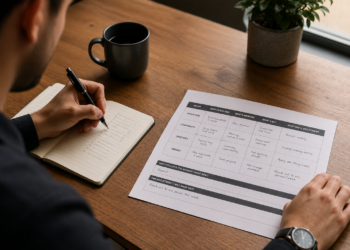

المنظومة التي تبنيها في جلسة واحدة لا تصمد تلقائيا أمام الحياة الحقيقية. تخطيط مرحلة التأسيس هو الأولى من ثلاث خطوات لمنحها بنية كافية لتُختبر فعلا.
لماذا تنهار معظم المنظومات الجديدة خلال شهر
في عملي في تنفيذ البرامج، من Enactus وAMIDEAST إلى Millennials Consulting، تعلمت نفس الدرس في كل مرة. الخطة تصمد أمام شهرها الأول بالتصميم، لا بالحظ.
الخطط التي انهارت لم تكن سيئة التصميم، لكنها ببساطة لم تحتوِ على لحظة مُعدّة مسبقا لتعديل الأمر الوحيد الذي كان معطّلا فعلا.
لمن هذا، وكم يستغرق
نحو 7 دقائق. يحتاج إلى منظومة مصممة بالفعل، من أي تمارين أنجزتها.
ماذا يتضمن هذا التمرين
- حقل لإعادة تأكيد النية.
- حقل للإيقاع الذي تتبعه.
- حقل لتسجيل الإخفاقات دون حكم.
كيف تستفيد منه أكثر
قرّر كيف ستسجّل إخفاقا قبل أن يحدث. من الأصعب التفكير بوضوح في ذلك في اللحظة نفسها.
ما الذي يتغيّر إن فعلت هذا فعلا
النتيجة المباشرة هي خطة تأسيس. الفائدة هي منظومة تُختبر فعلا، لا مجرد أمل. الأثر هو منظومات أقل يتم التخلي عنها بعد أول أسبوع سيء.
تحميل تخطيط مرحلة التأسيس
الخطوة التالية: خطة تعديل متغيّر واحد، لتقرير ما ستغيّره قبل أن تحتاج إلى ذلك.
الأسئلة الشائعة
ما الفرق بين هذا وخطة التنفيذ لتسعين يوما الكاملة؟
الخطة الكاملة تغطي المراحل الثلاث، التأسيس، والتعديل، والاستقلالية، في وثيقة واحدة. هذه هي المرحلة الأولى فقط.
هل أحتاج إلى منظومة مبنية بالكامل لاستخدام هذا؟
تحتاج على الأقل إلى نية تقريبية وإيقاع. لا يجب أن يكون الأمر متقنا.
ما الذي يُحتسب «إخفاقا»؟
أي يوم لم يحدث فيه الإجراء كما خُطّط له. سجّله ببساطة، دون قصة مرفقة.

![Why Does Your System Only Work When You Feel Like It? (The Two Parts Every System Actually Needs) Every system that holds has the same starting point: a fixed trigger and one small, defined action. The Trigger-Action Designer builds both in about 7 minutes, the two parts most plans skip in favor of just deciding to try harder. A system is a structure, not a feeling At IBM, we didn’t manage large accounts by hoping the team felt inspired on a given Tuesday. We built fixed checkpoints, specific and repeatable. I didn’t think of that as a life skill at the time. It is one. A trigger has to be fixed, never “whenever I feel like it,” and an action has to be small enough to do without deciding. Who this is for, and how long it takes About 7 minutes. For anyone who has an intention but no system carrying it yet. What’s inside A trigger field. An action field. A worked example. How to get the most out of it Resist making the action bigger than it needs to be. Small enough to do without deciding is the whole point. What changes if you actually do this The output is one designed system start. The outcome is that the action becomes something you don’t have to decide on. The impact is that your intention gets a structure to run on. Download The Trigger-Action Designer [Download button placeholder, to be added.] Next step: The Follow-Through Tracker, which adds the part most systems skip and runs the whole thing for the first time. FAQ How is this different from the full Continuity Design Template? The full template includes the follow-through step too, in one sitting. This is the first half, for a quick start. What if I can’t think of a good trigger? Anchor it to something that already happens every day, closing your laptop, making coffee, a specific time. Consistency matters more than cleverness. Does this work for team systems, not just personal ones? Yes. The same trigger-and-action logic applies to a team habit as much as a personal one.](https://yassinebentaleb.com/wp-content/uploads/2026/07/Why-Does-Your-System-Only-Work-When-You-Feel-Like-It-The-Two-Parts-Every-System-Actually-Needs-350x250.png)