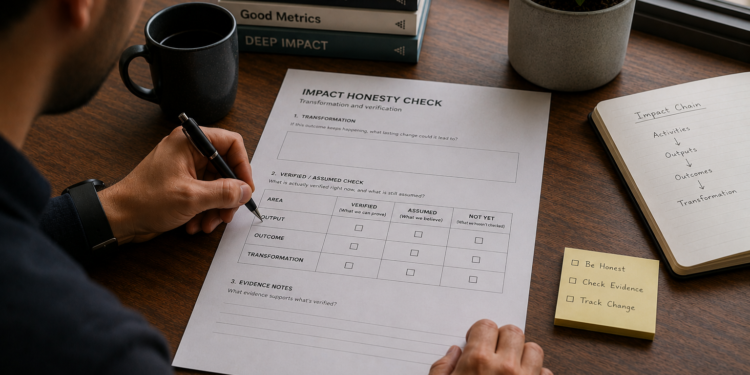
الناتج والنتيجة يخبرانك بما حدث. التحوّل يسأل عمّا يمكن أن يُبنى عليه إن استمر الأمر. فحص صدق الأثر يضيف هذه الطبقة، ثم يجعلك تُحدّد ما هو متحقّق منه فعلا.
التغيير الدائم أبعد مما يبدو
التحوّل نادرا ما يكون مرئيا بعد جهد واحد. غالبا ما يظهر بعد جهود متعددة، إن كنت صادقا في متابعته.
المنظمات التي راجعتها في Miller Center والتي كانت مستعدة لقول «لم يُثبت بعد» بشأن أرقامها الخاصة لم تكن أبطأ في النمو. كانت فقط أصعب في خداعها، بما في ذلك خداعها لنفسها.
لمن هذا، وكم يستغرق
نحو 7 دقائق. يعمل بشكل أفضل مباشرة بعد اختبار الناتج مقابل النتيجة.
ماذا يتضمن هذا التمرين
- حقل للتحوّل.
- فحص من ثلاثة أجزاء، متحقّق منه أو مفترَض.
كيف تستفيد منه أكثر
حدّد بصدق، حتى لو انتهت معظم الخانات إلى «مفترَض». هذه هي النتيجة المفيدة.
ما الذي يتغيّر إن فعلت هذا فعلا
النتيجة المباشرة هي فحص صدق مكتمل. الفائدة هي أنك تستطيع الدفاع عن ادعاءات أثرك بشيء أكثر دقة من النشاط. الأثر هو أن تقاريرك تتوقف عن الخلط بين الحجم والدليل.
تحميل فحص صدق الأثر
الخطوة التالية: استرجاع الركائز الأربع، الذي يجمع هذا مع نيتك، ومنظومتك، ومعيارك.
الأسئلة الشائعة
ما الفرق بين هذا ولوحة قياس الأثر الكاملة؟
اللوحة الكاملة تبني الطبقات الثلاث، الناتج، والنتيجة، والتحوّل، في جلسة واحدة. هذا هو طبقة التحوّل والصدق فقط، لما بعد أن تكون قد كتبت الناتج والنتيجة بالفعل.
ماذا لو انتهى كل شيء إلى «مفترَض»؟
هذه معلومة مفيدة، لا نتيجة سيئة. تخبرك بالضبط بما يجب التحقق منه بعد ذلك.
هل يمكنني استخدام هذا دون إنجاز اختبار الناتج مقابل النتيجة؟
نعم، طالما أن لديك بالفعل ناتجا ونتيجة في ذهنك.

![Why Does Your System Only Work When You Feel Like It? (The Two Parts Every System Actually Needs) Every system that holds has the same starting point: a fixed trigger and one small, defined action. The Trigger-Action Designer builds both in about 7 minutes, the two parts most plans skip in favor of just deciding to try harder. A system is a structure, not a feeling At IBM, we didn’t manage large accounts by hoping the team felt inspired on a given Tuesday. We built fixed checkpoints, specific and repeatable. I didn’t think of that as a life skill at the time. It is one. A trigger has to be fixed, never “whenever I feel like it,” and an action has to be small enough to do without deciding. Who this is for, and how long it takes About 7 minutes. For anyone who has an intention but no system carrying it yet. What’s inside A trigger field. An action field. A worked example. How to get the most out of it Resist making the action bigger than it needs to be. Small enough to do without deciding is the whole point. What changes if you actually do this The output is one designed system start. The outcome is that the action becomes something you don’t have to decide on. The impact is that your intention gets a structure to run on. Download The Trigger-Action Designer [Download button placeholder, to be added.] Next step: The Follow-Through Tracker, which adds the part most systems skip and runs the whole thing for the first time. FAQ How is this different from the full Continuity Design Template? The full template includes the follow-through step too, in one sitting. This is the first half, for a quick start. What if I can’t think of a good trigger? Anchor it to something that already happens every day, closing your laptop, making coffee, a specific time. Consistency matters more than cleverness. Does this work for team systems, not just personal ones? Yes. The same trigger-and-action logic applies to a team habit as much as a personal one.](https://yassinebentaleb.com/wp-content/uploads/2026/07/Why-Does-Your-System-Only-Work-When-You-Feel-Like-It-The-Two-Parts-Every-System-Actually-Needs-350x250.png)