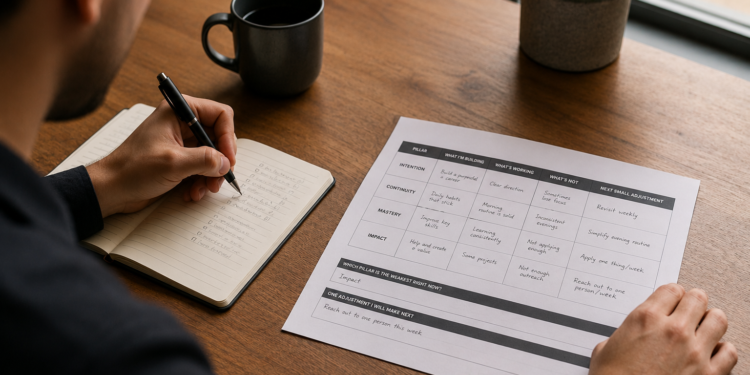
إعادة قراءة منظومة مكتملة تخبرك بشيء لن تخبرك به قائمة مهام أبدا: ليس فقط ما تفعله، بل ما إذا كانت القطع تعزّز بعضها أو تعمل بصمت ضد بعضها. مراجعة أضعف ركيزة هي تلك القراءة الختامية.
معظم الاختلال يبقى غير مرئي
معظم الاختلال يبقى غير مرئي لأن الركائز الأربع تُقيّم عادة بشكل منفصل، هدف تلو هدف، عادة تلو عادة. رؤيتها معا تغيّر ما تلاحظه.
هذا أيضا، بصدق، من أكثر التمارين فائدة في هذه المكتبة كاملة، ليس لأنه يُعلّم شيئا جديدا، بل لأنه يُريك ما تملكه بالفعل، دفعة واحدة.
لمن هذا، وكم يستغرق
نحو 7 دقائق. تعمل بشكل أفضل بعد استرجاع الركائز الأربع وورقة عمل طبقة المنظومة.
ماذا يتضمن هذا التمرين
- جدول ملخّص.
- سؤال لتحديد الركيزة الأضعف.
- حقل لتعديل واحد.
كيف تستفيد منه أكثر
أجرِ تعديلا صغيرا، لا شيء دراميا. هذه ليست لحظة إعادة بناء كل شيء.
ما الذي يتغيّر إن فعلت هذا فعلا
النتيجة المباشرة هي تعديل واحد على الركيزة الأضعف. الفائدة هي أنك تتوقف عن معاملة كل ركيزة كمشروع منفصل. الأثر هو أن المنظومة كاملة تصمد بشكل أفضل تحت الضغط.
تحميل مراجعة أضعف ركيزة
الخطوة التالية: تخطيط مرحلة التأسيس، لتحويل هذا إلى شيء يصمد أمام شهر عادي.
الأسئلة الشائعة
ما الفرق بين هذا ومخطط نظامك الشخصي الكامل؟
المخطط الكامل يبني الخطوات الثلاث، الاسترجاع، والربط، والمراجعة، في جلسة واحدة تستغرق نحو 30 دقيقة. هذا هو الثلث الأخير، القراءة الختامية والتعديل.
ماذا لو لم أستطع تحديد الركيزة الأضعف؟
ابحث عن تلك التي تشعر بأكبر رغبة في تجنب الحديث عنها. عادة ما تكون تلك هي الإجابة الصادقة.
كم مرة يجب أن أعيد هذا التمرين؟
كلما شعرت أن شيئا مختلا، أو مرة كل ثلاثة أشهر على الأقل كنقطة تفقّد.


![Why Does Your System Only Work When You Feel Like It? (The Two Parts Every System Actually Needs) Every system that holds has the same starting point: a fixed trigger and one small, defined action. The Trigger-Action Designer builds both in about 7 minutes, the two parts most plans skip in favor of just deciding to try harder. A system is a structure, not a feeling At IBM, we didn’t manage large accounts by hoping the team felt inspired on a given Tuesday. We built fixed checkpoints, specific and repeatable. I didn’t think of that as a life skill at the time. It is one. A trigger has to be fixed, never “whenever I feel like it,” and an action has to be small enough to do without deciding. Who this is for, and how long it takes About 7 minutes. For anyone who has an intention but no system carrying it yet. What’s inside A trigger field. An action field. A worked example. How to get the most out of it Resist making the action bigger than it needs to be. Small enough to do without deciding is the whole point. What changes if you actually do this The output is one designed system start. The outcome is that the action becomes something you don’t have to decide on. The impact is that your intention gets a structure to run on. Download The Trigger-Action Designer [Download button placeholder, to be added.] Next step: The Follow-Through Tracker, which adds the part most systems skip and runs the whole thing for the first time. FAQ How is this different from the full Continuity Design Template? The full template includes the follow-through step too, in one sitting. This is the first half, for a quick start. What if I can’t think of a good trigger? Anchor it to something that already happens every day, closing your laptop, making coffee, a specific time. Consistency matters more than cleverness. Does this work for team systems, not just personal ones? Yes. The same trigger-and-action logic applies to a team habit as much as a personal one.](https://yassinebentaleb.com/wp-content/uploads/2026/07/Why-Does-Your-System-Only-Work-When-You-Feel-Like-It-The-Two-Parts-Every-System-Actually-Needs-350x250.png)