
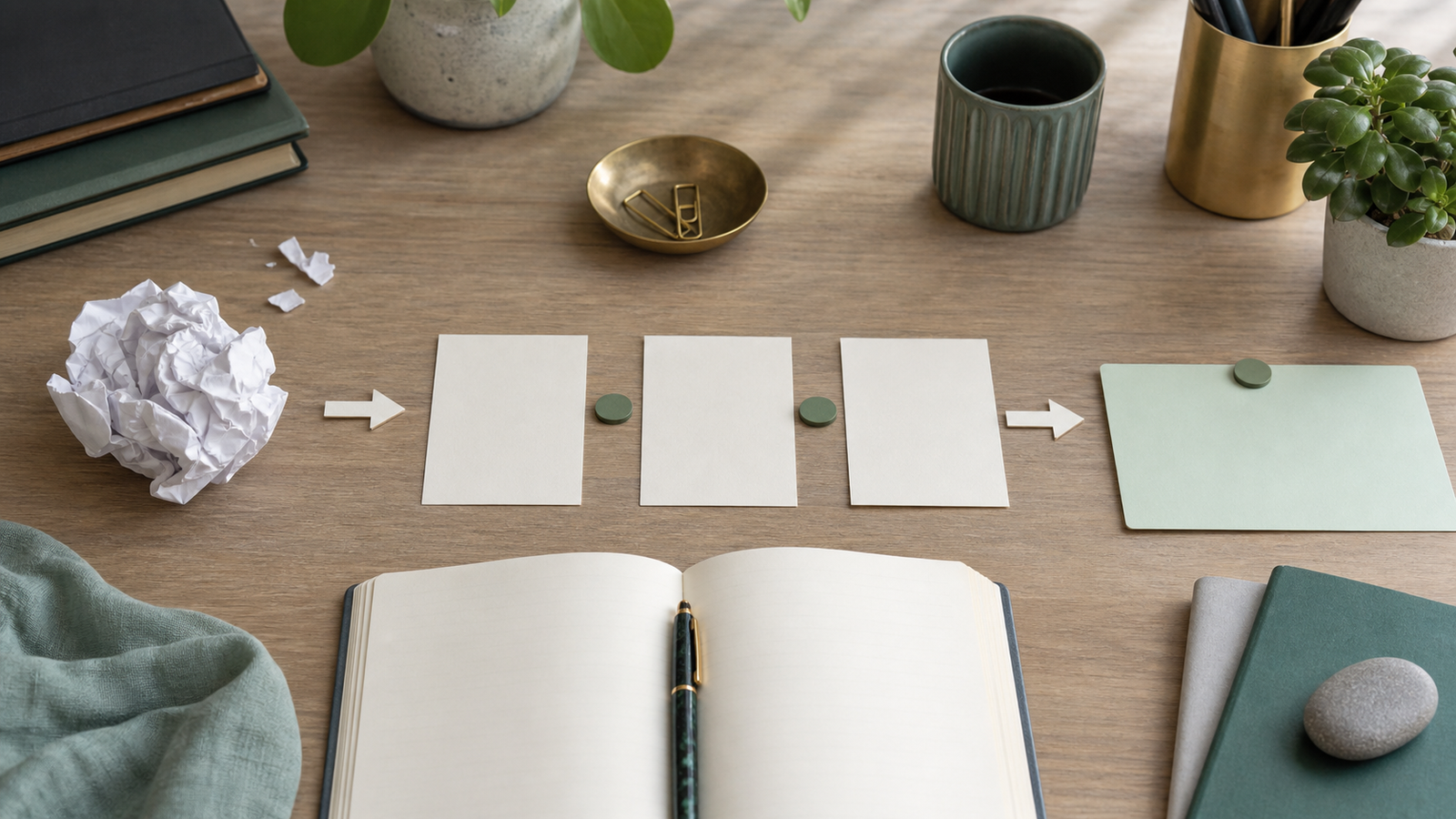
A mistake doesn’t become a lesson unless you examine it. Without that, it stays one of two useless things: a wound you ruminate over, or a detail you forget.
Learning from your mistakes isn’t a matter of positive attitude. It’s a skill, and like any skill, it’s worked on with a method.
The two wrong ways to react to a mistake
Rumination
The first reflex is to punish yourself: replaying the mistake on loop, judging yourself, turning a fact into a trial against yourself. Rumination gives the impression of “dealing” with the mistake, but it produces no correction. It hurts without learning anything.
Avoidance
The second reflex is the opposite: moving quickly to something else, minimizing, not looking. This is comfortable in the moment, but the unexamined mistake has every chance of returning. What we refuse to look at, we tend to repeat.
The mistake is data, not a verdict
In my framework, mastery is the third pillar. The Arabic word means precision, sincerity, continuous improvement. Mastery here doesn’t mean perfection, accountability, or progress.
How to learn from your mistakes
1. Write down what happened without interpretation
Facts only. No judgment, no justification.
2. Ask “why” not “who’s at fault”
Why did this happen? What led to it? This opens the door to learning.
3. Define a single concrete action
What will you do differently next time? Without this, the analysis stays without effect.
What’s next?
Learning from mistakes is part of mastery, the third pillar. Without it, you don’t truly improve.
Next step: Read the Method
Frequently Asked Questions
Is guilt useful?
No. Guilt consumes energy without correcting anything.
What if I repeat the same mistake?
Return to the first step. Repetition is a sign that the lesson wasn’t fully absorbed yet.
How do I avoid hardening myself?
Separate the action from the self. The mistake happened; you’re not a failure.