When something in your work slows down, the instinct is to attack whatever is making the most noise. The overflowing inbox. The complaint that keeps coming back. The task that feels heaviest this week. So you fix it, feel productive, and notice nothing actually moved faster.
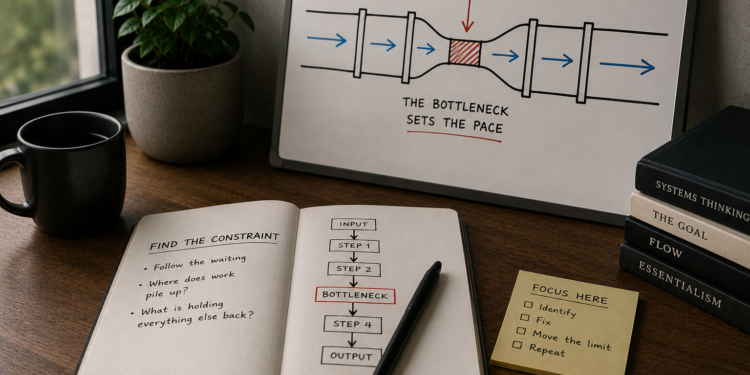
That is because the loudest problem is rarely the limiting one. Every system has a single constraint that sets its real pace, the way the narrowest point in a pipe decides how much water gets through. Widen any other section and you have done nothing. The flow is still capped at the narrow point.
The lesson from managing projects
I learned this managing projects at IBM. A project would fall behind, and the temptation was always to push harder on everything at once. More hours, more pressure, more meetings across the whole thing. It almost never worked, because a project does not move at the speed of its busiest part. It moves at the speed of its slowest one.
The teams that recovered were the ones that stopped and asked a narrower question. Of all the things that are late, which single one is holding the others back? Fix that, and the whole timeline loosens. Fix anything else, and you have just exhausted people for no gain.
Finding the real constraint
The constraint is usually quiet. It does not complain, because it is not overloaded in the way a noisy problem is. It is simply the step everything else waits on.
To find it, follow the waiting, not the noise. Where does work pile up before it can continue? What is the one thing that, if it disappeared, would let several other things move at once? That is your constraint. It is rarely the task you were dreading, and often something small and structural you had stopped noticing.
Why the work never ends
Here is the part most people miss. The moment you fix the constraint, it moves. Relieve the slowest step and something else becomes the new slowest step. This is not failure. It is how systems work.
So the goal is not to find the bottleneck once and be done. It is to build the habit of asking, again and again, where is the limit right now. A system you can keep improving is one where you always know which single thing is currently holding it back.
Before you work harder on everything, find the one place where working harder would actually matter. Then ignore the noise until that one place is clear.