
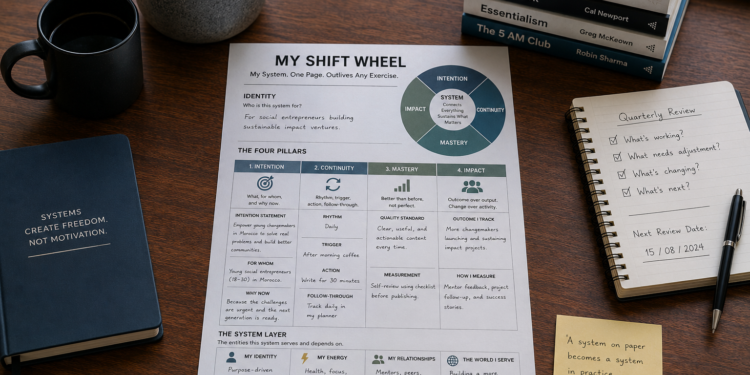
بعد أن تعمل على كل عنصر على حدة، تحتاج إلى مكان يجمع كل شيء معا. هذه الوثيقة هي تلك الصفحة الواحدة: ملخص لنظامك الشخصي بأكمله، مكتوب بلغتك أنت.
لماذا تحتاج إلى وثيقة واحدة وليس إلى خمس وثائق منفصلة
الوثيقة الواحدة هي ما يُرى دفعة واحدة ليتذكّر الشخص لماذا يفعل ما يفعله.
معظم الناس يملكون قطعا من نظامهم: دفتر للنية، جدول للعادات، ملاحظات متفرقة عن الجودة. لكن لا أحد يرى الصورة الكاملة. هذا التشتت يجعل من الصعب معرفة ما يُقوّي وما يُضعف.
التمييز الذي يمنح الوضوح
النظام الجيد ليس هو الأكثر تفصيلا، بل الأكثر قابلية للرؤية دفعة واحدة. إذا كان عليك أن تفتح خمسة ملفات لتفهم نظامك، فهو ليس موجودا فعلا. هذه الوثيقة تجمع العناصر الخمسة في مكان واحد.
ما تحتويه الوثيقة
- النية: جملة واحدة تلخص وجهتك.
- الاستمرارية: الروتين الثلاث التي تحمي طاقتك.
- الإحسان: المعيار الذي ترفض النزول دونه.
- الأثر: النتيجة التي تقيسها فعلا.
- المنظومة: كيف تتفقد على هذه العناصر وتُعيدها إلى مسارها.
مثال ملموس
شخص ملأ وثيقته في جلسة واحدة من 45 دقيقة. لم تكن مثالية، لكنه رأى لأول مرة أين تترابط أجزاء نظامه المتفرقة مع بعضها. ذلك الربط هو الهدف الحقيقي.
ما الذي يتغيّر إن فعلت هذا فعلا
لن تحتاج للبحث في أدوات متفرقة لتذكّر نفسك بنظامك. ستملك وثيقة واحدة تراجعها وتُحدّثها متى تغيّر شيء.
تحميل الوثيقة
الخطوة التالية: اقرأ المنهج ←، أو ارجع إلى تقييم الفجوة الذاتي إذا كنت لا تزال تبني الصورة.
الأسئلة الشائعة
هل يجب أن تكون الوثيقة كاملة من أول يوم؟
لا. معظم الناس يبدؤون بجزءين أو ثلاثة ويكملون الباقي مع الوقت.
ماذا لو تغيّر نظامي لاحقا؟
الوثيقة ليست منحوتة في الحجر. حدّثها كلما تطوّر شيء حقيقي في أي عنصر من العناصر الخمسة.
هل أحتاج لجميع الأدوات الأخرى قبل ملء هذه؟
لا يشترط. إذا كنت قد عملت على بعض العناصر، ابدأ بما لديك وأكمل الباقي تدريجيا.

![Why Does Your System Only Work When You Feel Like It? (The Two Parts Every System Actually Needs) Every system that holds has the same starting point: a fixed trigger and one small, defined action. The Trigger-Action Designer builds both in about 7 minutes, the two parts most plans skip in favor of just deciding to try harder. A system is a structure, not a feeling At IBM, we didn’t manage large accounts by hoping the team felt inspired on a given Tuesday. We built fixed checkpoints, specific and repeatable. I didn’t think of that as a life skill at the time. It is one. A trigger has to be fixed, never “whenever I feel like it,” and an action has to be small enough to do without deciding. Who this is for, and how long it takes About 7 minutes. For anyone who has an intention but no system carrying it yet. What’s inside A trigger field. An action field. A worked example. How to get the most out of it Resist making the action bigger than it needs to be. Small enough to do without deciding is the whole point. What changes if you actually do this The output is one designed system start. The outcome is that the action becomes something you don’t have to decide on. The impact is that your intention gets a structure to run on. Download The Trigger-Action Designer [Download button placeholder, to be added.] Next step: The Follow-Through Tracker, which adds the part most systems skip and runs the whole thing for the first time. FAQ How is this different from the full Continuity Design Template? The full template includes the follow-through step too, in one sitting. This is the first half, for a quick start. What if I can’t think of a good trigger? Anchor it to something that already happens every day, closing your laptop, making coffee, a specific time. Consistency matters more than cleverness. Does this work for team systems, not just personal ones? Yes. The same trigger-and-action logic applies to a team habit as much as a personal one.](https://yassinebentaleb.com/wp-content/uploads/2026/07/Why-Does-Your-System-Only-Work-When-You-Feel-Like-It-The-Two-Parts-Every-System-Actually-Needs-350x250.png)