You can read English fluently. You understand most of what you hear. But the moment someone expects you to respond out loud, in real time, the words disappear and you freeze mid-sentence, reaching for a simple word you know perfectly well in writing.
This gap between passive knowledge and active speech is one of the clearest blind spots in Mastery, the third pillar of The Method. You can study a language for years and still not have practiced the one skill that actually gets tested in real conversations: producing it live, under mild pressure, in front of another person.
What Cambly actually changes
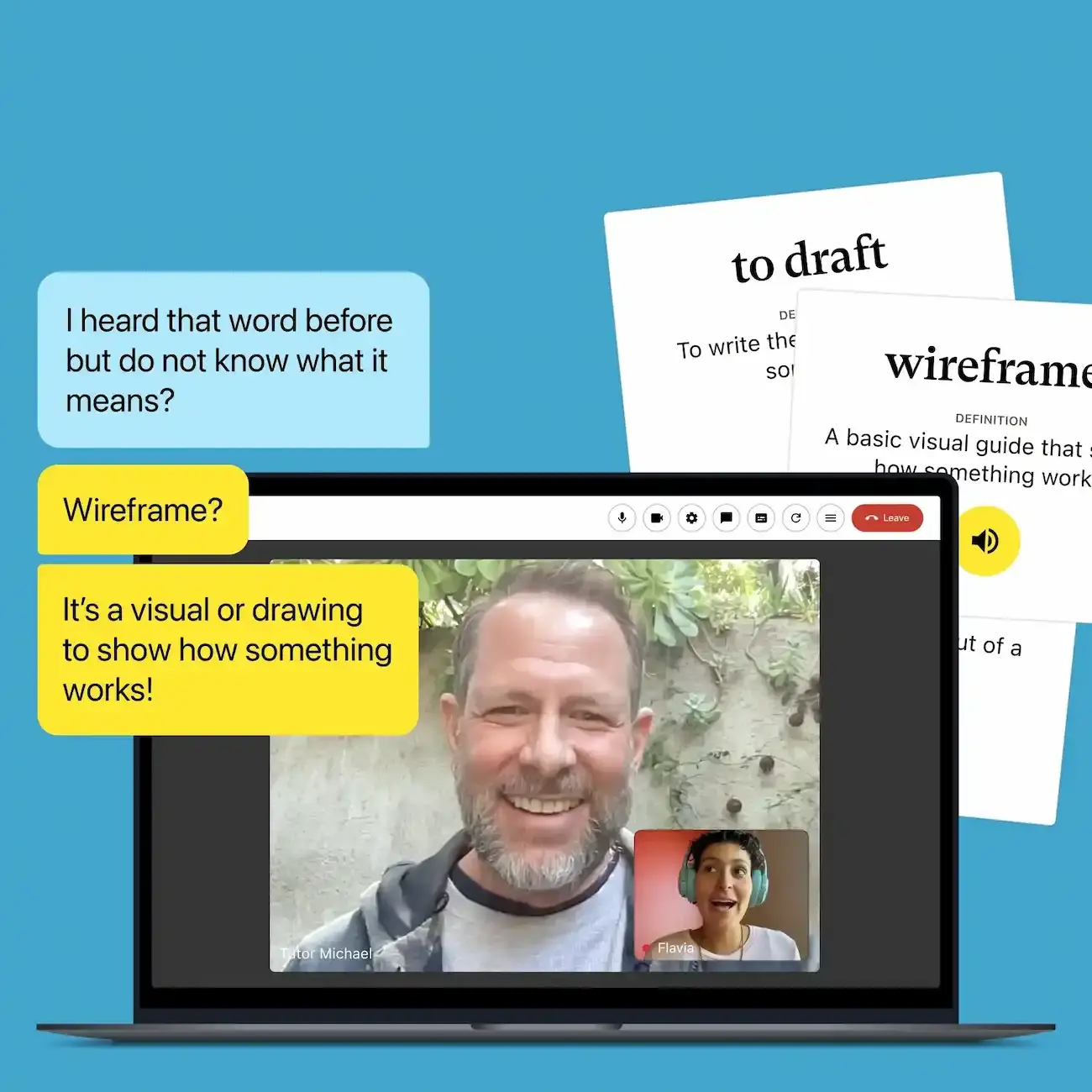
Cambly connects you with native English speakers for on-demand video conversation, without scheduling weeks in advance or following a fixed curriculum someone else designed. You can talk about whatever you actually need: a work scenario you are nervous about, an upcoming presentation, or simply ordinary conversation if that is where you are starting from.
That distinction matters more than it sounds. Studying builds recognition. Conversation builds production: the reflex of finding a word under time pressure, recovering from a mistake mid-sentence, and continuing anyway. No app drill replicates that pressure as well as an actual person waiting for your answer.
The honest part: it is not a substitute for grammar study
Cambly will not teach you grammar from scratch, and conversation alone is an inefficient way to learn structures you have never encountered. It works best as a complement to structured study, not a replacement for it. It is also worth knowing that tutor quality varies, since it is a marketplace of native speakers rather than uniformly certified teachers, so trying a few before settling on someone is a reasonable approach.
Three things tend to separate people who actually improve from people who book a few calls and stop:
- Come to each call with something specific to practice, a real scenario, not just an open invitation to chat.
- Accept the discomfort of making mistakes out loud as the actual mechanism of progress, not a sign you are behind where you should be.
- Treat it as a regular practice, at minimum weekly, rather than a one-time test of your current level.
Where this fits in the bigger picture
Mastery in a language is built in moments of discomfort, repeated often, not in moments where everything feels easy. If your vocabulary is solid but your speaking still freezes the moment it matters, Cambly addresses exactly that gap, directly and repeatedly, instead of leaving it to resolve itself.
Fluency is rarely the absence of hesitation. It is the ability to keep going through it.
Frequently asked questions
Is Cambly good for business English?
Yes. Many tutors are used to professional conversation topics, and the flexibility to choose what to discuss makes it straightforward to focus calls on work scenarios specifically.
How is Cambly different from an app like Babbel?
Babbel builds structured knowledge through lessons. Cambly builds the speaking reflex through live conversation. They address different parts of the same gap, and used together, each compensates for what the other does not cover.