You have a clear idea for a platform: a way to connect two groups of people, a simple directory, a small marketplace. You can describe exactly how it should work. You cannot code it, and a developer would cost more than the idea has had a chance to prove it deserves.
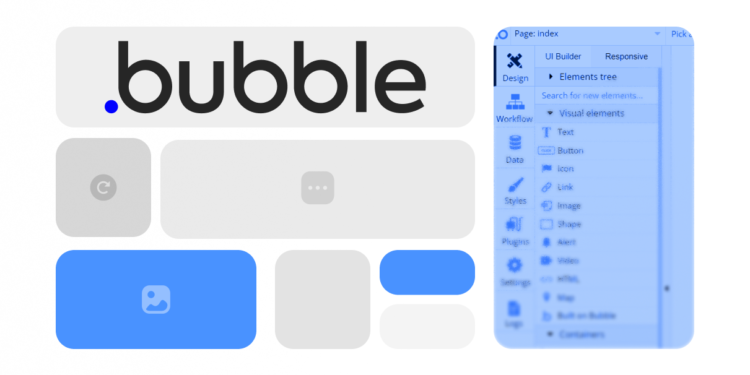
Bubble.io is a no-code platform for building real, functioning web applications, not just landing pages or contact forms. It supports user accounts, databases, workflows, and payments, the structural pieces a working platform needs, assembled visually instead of written line by line.
The connection to Intention is in closing the gap between concept and reality. The Method starts with clarity about what you want to build, but clarity only matters if it can meet real people. Bubble.io removes the biggest blocker for many founders: needing a developer, or becoming one, just to find out whether an idea works.
What Bubble.io Does Differently
The main difference is depth. Many no-code tools are excellent for websites and simple forms. Bubble.io is designed for applications with logic: who can see what, what happens when a user takes an action, and how data moves between parts of the product.
The second difference is that you own the whole build. Design, database, and workflows live in one place, and you can keep changing them as you learn from users. That makes it well suited to testing an idea quickly and adjusting it without waiting for someone else.
The Honest Part
Bubble.io is not instant. Building something solid takes weeks of focused work, not an afternoon, and the visual interface trades one kind of complexity for another rather than removing complexity entirely. People who expect it to be effortless tend to get frustrated quickly.
As a product grows significantly in traffic and complexity, some teams eventually rebuild parts of it in custom code. That is a problem worth having, because it means the idea worked. Plans are priced by usage and features, so check Bubble.io’s site for current pricing.
Three Principles Worth Keeping in Mind
- Build the smallest useful version. Test the core idea with the fewest features that let real people use it, not every feature you can imagine.
- Budget time to learn the tool. Give yourself real time to understand Bubble.io’s logic before judging whether the idea works.
- Treat the first build as research. Its job is to show you what users actually need, not to be the finished platform.
Where This Fits in the Bigger Picture
Momentum has to stay alive long enough for an idea to meet reality. A rough version that real people can use teaches you more in a month than a perfect plan will on paper.
If the only thing between a concept and a working platform is the cost or availability of a developer, Bubble.io is worth learning properly. It helps turn Intention into something testable, and a tested idea is where lasting Impact can begin.
FAQ
Do I need to know how to code to use Bubble.io?
No. Bubble.io is designed so that databases, user accounts, and workflows can be built without writing code, though learning the tool’s own logic still takes time.
Can Bubble.io handle a real platform with real users?
Yes, within limits. Many products run on Bubble.io well beyond the early stage. As traffic and complexity grow, some teams move parts of the product to custom code.