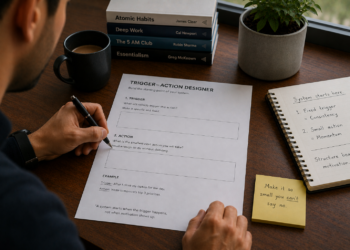
The trace is being made now, today, in every interaction, whether or not it is ever examined. The colleague leaves the meeting carrying something of you. The child absorbs the tone of the kitchen. Legacy is not the estate or the monument. It is what you leave in people, deposited daily, and The Five Deposits names five small, schedulable ways to make those deposits on purpose.
Why legacy is not a later chapter
The trace compounds in moments, not events, which means the legacy practice is not an addition to a full life. It is a change in how the existing minutes get spent, the same conversations, the same commute, the same dinner table, deposited deliberately instead of by default. Run at full architecture, the whole practice costs close to zero extra hours a week.
Through Impactedia, the pattern that keeps showing up is people postponing legacy to a freer season while depositing an unexamined trace in everyone around them regardless, because the deposits happen either way.
Who this is for, and how long it takes
A few minutes a day, one hour a week. For anyone with people around them, colleagues, children, students, a team, at any age or career stage, not only those near a title’s end.
What’s inside
- Five deposit instruments: full-presence minutes, spoken appreciation, genuine conversation, small kindness, and repair.
- A field for choosing this week’s first deliberate deposit, and who receives it.
- The nightly three-question review that keeps the practice running.
How to get the most out of it
Start with one person from your nearest circle who has been receiving remainders, the tired tone while the world gets the patient one. Give them one deliberate deposit this week. Not repair theater, just the practice’s first rep. The nightly three questions take seconds and fold into any review you already keep.
What changes if you actually do this
The output is one deliberate deposit this week instead of an unexamined default. The outcome is a trace shifting one moment at a time, in the direction you actually intend. The impact, compounded over years, is a legacy built the same way everything else in this practice is built: in public view of nobody, in the ordinary minutes that were always going to be spent regardless.
Download The Five Deposits
Next step: someone is six months behind you. The bench begins now, at any age, because the practice compounds from its start date, not its intention date.
FAQ
Do I need more time to start this practice?
No. It runs inside minutes you already have, the same conversations and commutes, deposited deliberately instead of by default.
What if I have been depositing remainders for years?
That is common, and it is not a verdict on your character. The trace responds to deliberateness faster than most habits, because its currency is moments, and everyone still holds those.
Is this only for parents or mentors?
No. Anyone whom someone watches, a colleague, a sibling, a friend, a stranger at the register, is depositing a trace in that person right now, examined or not.