
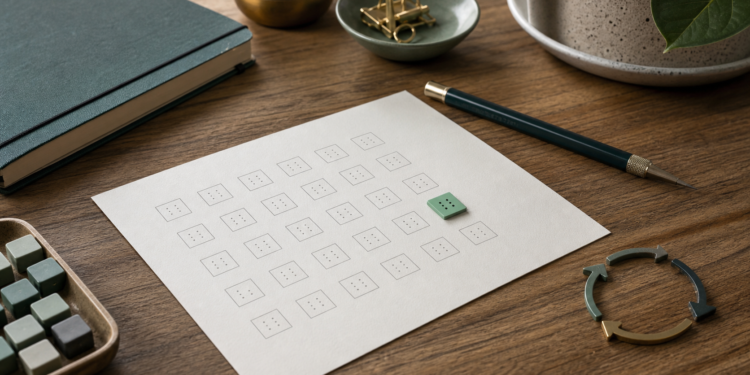
Deliberate practice is focused training, conducted at the edge of one’s capabilities and guided by precise progress/”>feedback. It’s not simple repetition: it’s what distinguishes those who truly progress from those who accumulate hours.
We often believe “the more you practice, the better.” This is false if the practice is passive. What makes you progress isn’t quantity, but the quality of attention paid to what you’re working on.
A simple definition
Deliberate practice consists of working specifically on what you don’t yet master, in conditions a bit too difficult, while seeking immediate feedback to correct. It’s intentional, uncomfortable, and measured, the complete opposite of automatic routine.
Deliberate practice versus simple repetition
Repeating a task you already know how to do maintains the level; it doesn’t raise it. You can drive for twenty years without becoming a better driver, because you’re repeating without seeking to progress.
Deliberate practice, on the other hand, precisely targets weak points, accepts mistake as information, and adjusts continuously. This intention is what transforms time spent into real progress.
Its principles
In my framework, mastery, the third pillar, is exactly this continuous improvement guided by precise feedback rather than time spent.
How to apply deliberate practice
1. Target a single weak point
Don’t train on everything together. Choose what needs the most attention.
2. Demand immediate feedback
Without knowing the outcome quickly, there’s no correction.
3. Accept the discomfort
Comfort doesn’t progress anything.
What’s next?
Deliberate practice is a targeted way to progress through feedback, the right effort, and useful repetition. It’s the heart of mastery, the third pillar.
Next step: Read the Method
Frequently Asked Questions
Is deliberate practice exhausting?
Yes, because it operates at the edge of capability. This is fine if the period is short.
Can it apply to everything?
Yes, the basic principle: targeting weak points, and obtaining direct feedback.
What’s the difference between it and ordinary practice?
Ordinary practice maintains the level. Deliberate practice raises it.